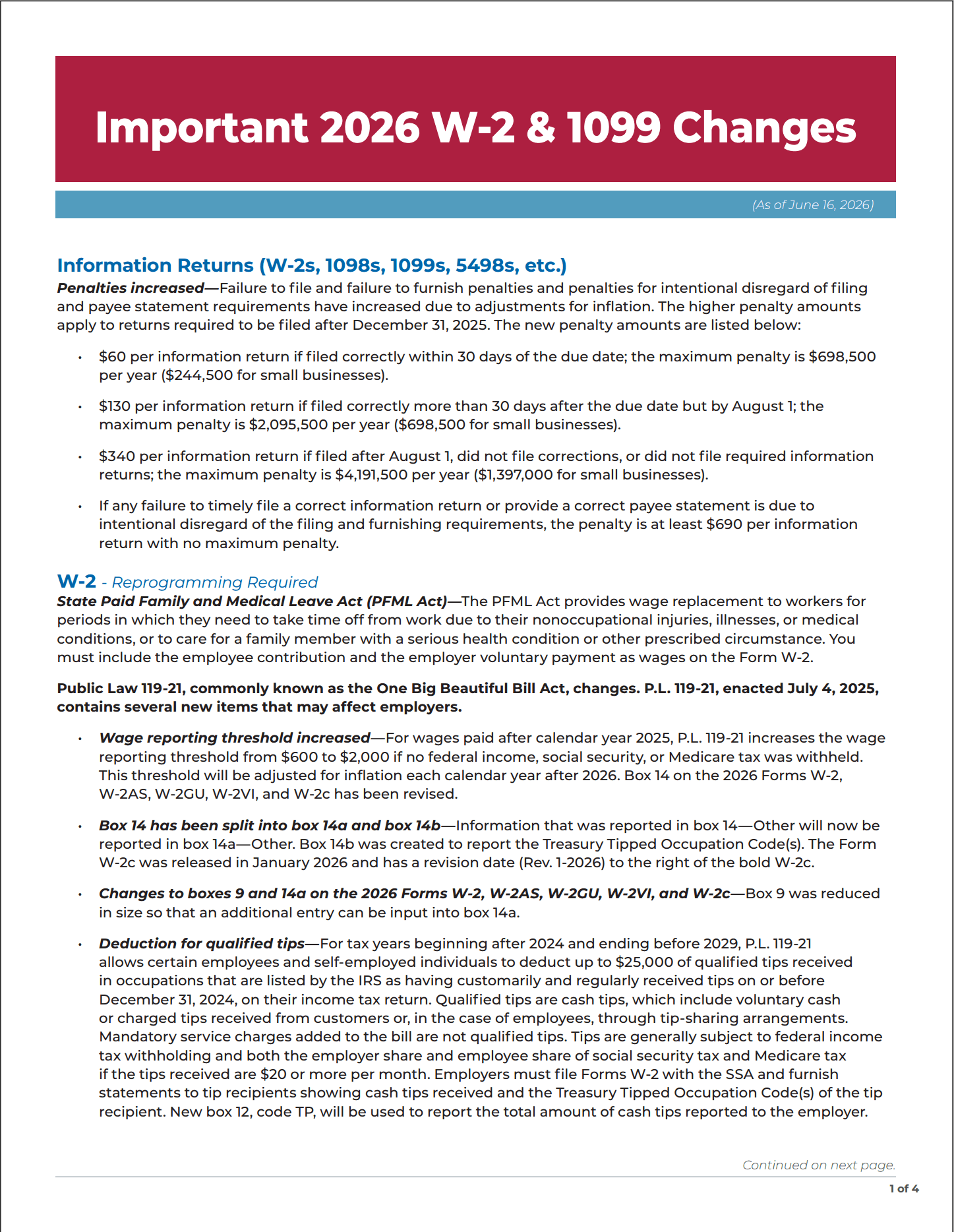
A missing W-2 copy, the wrong envelope window placement, or a last-minute order for compatible tax forms can turn a routine January task into an expensive delay. Tax filing trends are pushing more businesses to prepare earlier, verify data more carefully, and treat physical document supplies as part of the filing workflow rather than an afterthought.
Electronic filing continues to grow, but it has not removed the need for accurate printed forms, employee copies, recipient statements, correction documents, and secure mailing materials. For payroll teams, bookkeepers, and office managers, the practical question is not whether filing is becoming digital. It is how to keep digital records and physical paperwork aligned when deadlines arrive.
Tax Filing Trends Affecting Business Operations
One clear trend is the move toward earlier preparation. Businesses are collecting vendor information, reviewing payroll records, and confirming taxpayer identification details well before year-end. That shift is driven by tighter filing deadlines, increased attention to reporting accuracy, and the time required to correct information once forms have been issued.
For a small or midsize business, early preparation creates room to solve ordinary problems before they become urgent. A contractor may need an updated address before a 1099 is prepared. A payroll administrator may find that an employee’s name does not match payroll records. An accounting firm may need clients to confirm their year-end mailing preferences. None of these tasks is difficult on its own, but they add up quickly in December and January.
Another trend is the use of mixed workflows. A business may electronically submit information returns to the appropriate agency while still printing recipient copies for employees, contractors, clients, or internal records. That means form selection still matters. The correct copy designation, paper format, perforation, and printer compatibility can affect whether a document is usable when it reaches the recipient.
Electronic Filing Still Requires a Paper Plan
Electronic submission can reduce manual entry and speed up confirmation, but it does not always eliminate mailing. Employees may request paper W-2 forms. Contractors may receive paper 1099 statements. Businesses also need retained copies for files, audit support, and internal reconciliation. Some organizations print forms in-house, while others order preprinted forms or bundled tax kits to simplify the process.
The best option depends on volume and workflow. A company with a limited number of forms may prefer blank laser-compatible tax forms printed from its payroll or accounting software. A business with a high, repeatable volume may find preprinted or customized materials more efficient. Either way, ordering the correct stock early prevents staff from trying to force forms into envelopes that do not match the address window or folding pattern.
Double-window tax envelopes remain especially useful when form layouts are consistent. They reduce hand-addressing and help present the recipient and return addresses in the correct positions. Self-seal envelopes can also save time in large mailings, while moisture-seal options may suit offices with established inserting and mailing procedures. The right choice is operational, not cosmetic.
Accuracy Is Becoming a Larger Filing Priority
Tax reporting errors are costly because they often create more work after the original deadline. Incorrect names, addresses, identification numbers, payment totals, or form codes may require corrected statements and additional communication with recipients. As filing systems become more automated, inaccurate source data stands out faster and can be harder to explain away.
Businesses are responding by building verification steps into their year-end schedule. Payroll information should be reviewed before W-2 production. Vendor records should be checked before 1099 preparation. Mailing addresses should be confirmed before forms are printed and inserted. These checks are simple, but they are most effective when completed before the office is handling a high volume of envelopes and deadline-driven requests.
Document control matters as well. Tax forms contain sensitive personal and financial information, so loose stacks of printed forms should not sit unattended near shared printers, mail stations, or reception areas. Assign clear responsibility for printing, folding, inserting, and mailing. Keep recipient copies organized by batch, and maintain a record of what was issued and when.
For organizations that outsource part of the process, the same principle applies. Confirm who is responsible for filing, who is responsible for recipient mailings, and who retains the final records. A payroll provider, accountant, internal finance team, and office administrator may all touch the same filing cycle. Clear handoffs reduce duplicate work and prevent forms from being overlooked.
Tax Filing Trends Make Supply Timing More Important
The most practical purchasing trend is straightforward: businesses are moving routine tax supplies out of the last-minute category. Forms, compatible envelopes, printer toner, address labels, and file folders are low-cost compared with the disruption caused by running out of them during a mailing deadline.
A useful planning approach is to review last year’s quantities and adjust for changes in headcount, contractor count, client volume, or office locations. Do not estimate only the number of forms needed. Include extra forms for spoilage, reprints, corrections, and retained copies. Also confirm whether your software requires a particular form format, such as laser sheets, pressure-seal stock, or a specific copy sequence.
When reviewing tax document supplies, check these operational details:
- The required form year and copy designation for employees, recipients, payers, and filing records.
- Laser-print compatibility and whether your printer can handle the paper weight and sheet format.
- Envelope size, window configuration, closure type, and compatibility with the folded form.
- Quantity breaks that lower the per-unit cost without leaving excessive unused stock.
These details are where many purchasing mistakes occur. A standard envelope may be less expensive per box, but it can create extra labor if staff must add labels or manually position forms. A mismatched window envelope can expose the wrong information or require a complete reprint. The lowest product price is not always the lowest total cost when time, rework, and mailing accuracy are considered.
Build a Year-End Workflow That Can Handle Corrections
Corrections are a normal part of tax reporting, particularly for businesses with changing payroll records or a large contractor base. The goal is not to assume every form will be perfect. The goal is to build enough time and supply capacity to handle corrections without interrupting the rest of the operation.
Set internal deadlines ahead of official filing dates. For example, establish a cutoff for payroll and vendor data review, a separate date for final approval, and a mailing date that allows for unexpected reprints. Keep extra compatible forms and envelopes on hand so a correction does not require an emergency order.
It also helps to separate the preparation area from the mailing area. Print and quality-check forms first. Then fold, insert, seal, and sort them in batches. This reduces the chance that one recipient receives another person’s tax information. For larger mailings, use a batch log that identifies the date, form type, quantity, and staff member responsible for final review.
Choosing Forms and Envelopes for the Work You Actually Do
Tax supplies should match the process already in place, not force the process to change during its busiest period. If your team prints from payroll software, choose forms that work with that software and printer. If your forms display addresses through windows, match the envelope windows to the printed layout. If several departments prepare documents, standardize the products they use so staff are not guessing which envelope belongs with which form.
Form Technology provides businesses with tax forms, tax kits, W-2 forms, and tax envelopes designed for the practical requirements behind year-end reporting. Purchasing compatible forms and mailing materials from one source can simplify replenishment, especially for offices that also need checks, deposit tickets, invoices, and everyday envelopes throughout the year.
The tax filing trends worth watching are not just about software or filing methods. They are about preparation, accuracy, document security, and the ordinary supplies that keep a filing process moving. Put your tax form and envelope review on the calendar before year-end pressure begins, and your team will have more time to focus on the information inside each document.